
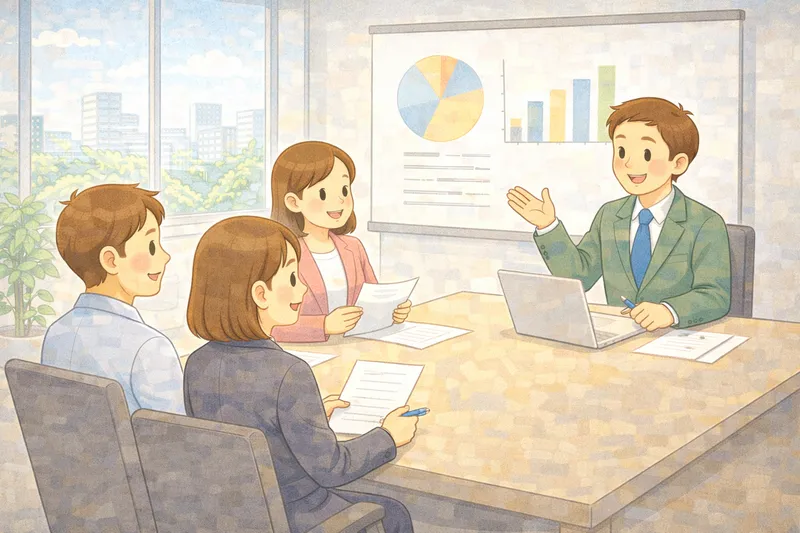
Every Monday morning, our team has a weekly meeting at nine o'clock. Today's meeting was particularly important because we had to discuss the new project. I arrived at the conference room fifteen minutes early to prepare my presentation. I connected my laptop to the projector and tested the slides. Slowly, my colleagues started arriving and taking their seats around the large table. Our manager, Mrs. Thompson, was the last to enter the room. She closed the door and welcomed everyone to the meeting. First, she asked us to review the agenda that she had sent by email the day before. The meeting would cover three main topics: the new project timeline, budget allocation, and team responsibilities. Mrs. Thompson began by summarizing the feedback we received from our client last week. The client was generally satisfied but requested some changes to the original plan. She displayed a chart showing the revised deadlines on the screen. The project needed to be completed two weeks earlier than we had originally planned. This news made everyone a bit worried because the timeline was already tight. My colleague Mark raised his hand and asked how we would manage this change. Mrs. Thompson explained that we might need to work overtime during the final phase. She also mentioned the possibility of hiring temporary staff to help with the workload. Next, the financial manager presented the budget breakdown for the project. We had been allocated fifty thousand euros for the entire project. However, with the new timeline, some costs would need to be redistributed. The marketing department would receive a smaller budget for advertising. Instead, more money would go to the development team for additional resources. Several people expressed their concerns about these budget changes. The marketing manager argued that reducing her budget would affect the project's visibility. After a brief discussion, Mrs. Thompson suggested a compromise. Both departments would need to find creative solutions to work within their limits. She promised to review the situation again in two weeks. The third part of the meeting focused on assigning responsibilities to team members. Mrs. Thompson had prepared a detailed document listing all the tasks. She went through each task and asked for volunteers or assigned people directly. I was assigned to lead the research phase along with two junior colleagues. This was a significant responsibility, but I felt confident about my abilities. Mark was put in charge of coordinating with the external vendors. Sarah, our designer, would handle all the visual elements of the project. The technical team would work on implementing the core features first. Mrs. Thompson emphasized the importance of regular communication between teams. She asked everyone to send weekly progress reports every Friday afternoon. These reports would help her identify any problems before they became serious. She also scheduled individual check-ins with each team leader for the following week. As the meeting continued, some team members raised additional questions. Someone asked about the possibility of working remotely during the project. Mrs. Thompson said that remote work would be allowed on certain days. However, she preferred that we meet in person at least three times a week. Face-to-face collaboration was essential for a project of this complexity. Another colleague asked about the tools we would use for project management. The company had recently started using a new software for tracking tasks. Mrs. Thompson arranged for a training session on Thursday afternoon. Everyone was required to attend and learn how to use the new system. Towards the end of the meeting, Mrs. Thompson opened the floor for general comments. A few people shared their ideas about how to improve team efficiency. Someone suggested having daily stand-up meetings to keep everyone aligned. Others thought this might be too time-consuming and preferred weekly updates. After considering both options, Mrs. Thompson decided on a compromise. We would have brief daily check-ins for the first month only. If the project was progressing well, we would switch to weekly meetings afterward. The meeting had lasted almost two hours, longer than anyone had expected. Mrs. Thompson thanked everyone for their participation and valuable input. She reminded us that the success of this project depended on our teamwork. Each person had an important role to play in achieving our goals. She encouraged us to reach out to her directly if we faced any difficulties. As we left the conference room, my colleagues and I discussed our assignments. We agreed to meet for lunch to talk more about our collaboration strategy. Mark suggested creating a shared document where we could track our progress. Sarah offered to design a visual timeline that everyone could reference. I felt motivated by the energy and commitment of my team members. Despite the challenges ahead, I was optimistic about our chances of success. We had a solid plan, clear responsibilities, and a supportive manager. With hard work and cooperation, I believed we could meet our ambitious deadline.
English Story (B1)The Office Meeting
aboutStory
A team attends a crucial Monday meeting where their manager discusses a new project with a tighter deadline, budget redistribution, and task assignments, emphasizing teamwork and regular communication.
1 / 68
🇬🇧→🇬🇧Click any sentence for translation
Translations are shown in the app language, which is also the language of this story. Which language do you speak?
Test your English skills with interactive exercises
Match 10 wordsFill 7 blanksReorder 7 sentencesDictate 7 sentences