Emma had always been curious about how websites and apps were made. One day, she decided that she would learn to code. She had heard that programming was difficult, but she was determined to try. Emma started by searching for free online courses. There were so many options that she felt overwhelmed at first. She read several articles about which programming language to learn first. Many people recommended Python because it was beginner-friendly. Emma chose a course called 'Python for Beginners' and signed up immediately. The first lesson explained what a programming language was. Emma learned that computers need specific instructions to perform tasks. A programming language is how humans communicate these instructions to machines. She installed Python on her laptop following the video instructions. Then she opened a text editor and wrote her first line of code. The code said: print('Hello, World!') When she ran the program, the words appeared on her screen. Emma felt a rush of excitement seeing her code actually work. The next lessons taught her about variables and data types. A variable is like a container that stores information. Emma created a variable called 'name' and stored her name in it. She also learned about numbers and how to do math in code. Adding, subtracting, multiplying, and dividing were all possible. Emma spent her evenings practicing what she had learned. Sometimes she made mistakes and her code did not run. These mistakes are called bugs in programming. Finding and fixing bugs was frustrating but also rewarding. Emma learned to read error messages carefully to understand what went wrong. After two weeks, she moved on to more advanced topics. She studied loops, which allow code to repeat actions many times. She also learned about conditions and how to make decisions in code. If-statements helped her write code that could respond differently to different inputs. Emma started working on her first real project: a simple calculator. The calculator would ask the user for two numbers and an operation. Then it would display the result. It took her an entire weekend to get it working properly. She was incredibly proud when she finally finished. Emma showed the calculator to her friend Marco, who was also interested in coding. Marco was impressed and asked her to teach him some basics. Teaching someone else helped Emma understand the concepts even better. They decided to learn together and meet every Saturday to practice. As weeks passed, Emma became more comfortable with Python. She learned how to create functions to organize her code better. Functions are reusable pieces of code that perform specific tasks. She also discovered libraries, which are collections of pre-written code. Libraries save programmers from having to write everything from scratch. Emma decided to try building a website using what she had learned. She needed to learn HTML and CSS in addition to Python. HTML is the language that structures the content of web pages. CSS is used to make websites look beautiful with colors and layouts. Learning multiple languages at once was challenging. But Emma enjoyed the process of learning new things. She built a simple personal website with her name and a short introduction. The website also had pictures of her hobbies and favorite books. Emma was thrilled to have created something that existed on the internet. Her family and friends visited the website and left positive comments. Encouraged by her progress, Emma set a bigger goal for herself. She wanted to create a web application that could help people. She thought about problems in her daily life that technology could solve. Emma noticed that she often forgot important tasks and appointments. She decided to build a task management application with reminders. This project was much more complex than her previous ones. She needed to learn about databases to store user information. A database is like a digital filing cabinet for organizing data. Emma spent many late nights working on her application. There were moments when she felt stuck and wanted to give up. But she remembered why she had started learning to code in the first place. She was curious, and she wanted to create something useful. After three months of work, Emma finally completed her task management app. Users could create accounts, add tasks, and set reminders. The app sent email notifications when deadlines were approaching. Emma shared the app online, and some people started using it. She received feedback and suggestions for improvements. Learning to accept criticism was an important part of becoming a better programmer. Emma continued to update her app based on what users wanted. She learned that software development is an ongoing process. A year had passed since Emma first started learning to code. She had gone from knowing nothing to building real applications. The journey had not been easy, but it had been worth it. Emma decided that she wanted to pursue a career in software development. She started applying for junior developer positions at tech companies. The interviews were challenging, as they tested her knowledge and problem-solving skills. Emma practiced coding challenges and reviewed computer science concepts. After several interviews, she received an offer from a startup company. The company was building an app to help people learn languages. Emma was excited because this combined her love of learning with technology. On her first day at work, Emma felt nervous but also incredibly happy. She had achieved something that once seemed impossible. Her colleagues welcomed her warmly and showed her around the office. Emma knew there was still so much more to learn. Technology was always changing, and programmers needed to keep learning. But Emma was not afraid of that challenge. After all, she had already proven that she could learn anything with enough determination. Looking back at her journey, Emma realized that the best decision she ever made was simply to start.
English Story (B1)Learning to Code
aboutStory
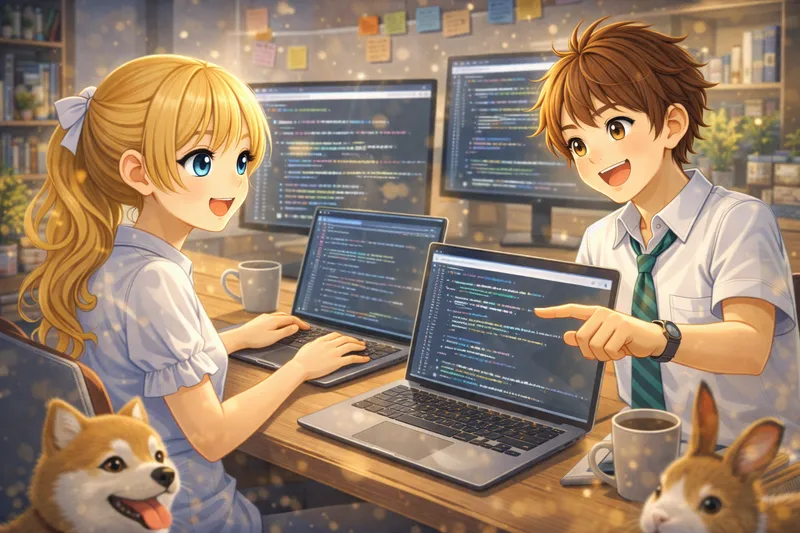
Emma decides to learn programming and starts with an online Python course. After mastering the basics, she builds a calculator and then a personal website. Eventually, she creates a task management app that people actually use. Her determination pays off when she lands a job as a junior developer at a startup.
1 / 92
🇬🇧→🇬🇧Click any sentence for translation
Translations are shown in the app language, which is also the language of this story. Which language do you speak?
Test your English skills with interactive exercises
Match 10 wordsFill 7 blanksReorder 7 sentencesDictate 7 sentences